
Nirav Modi step closer to extradition, loses his appeal in UK court
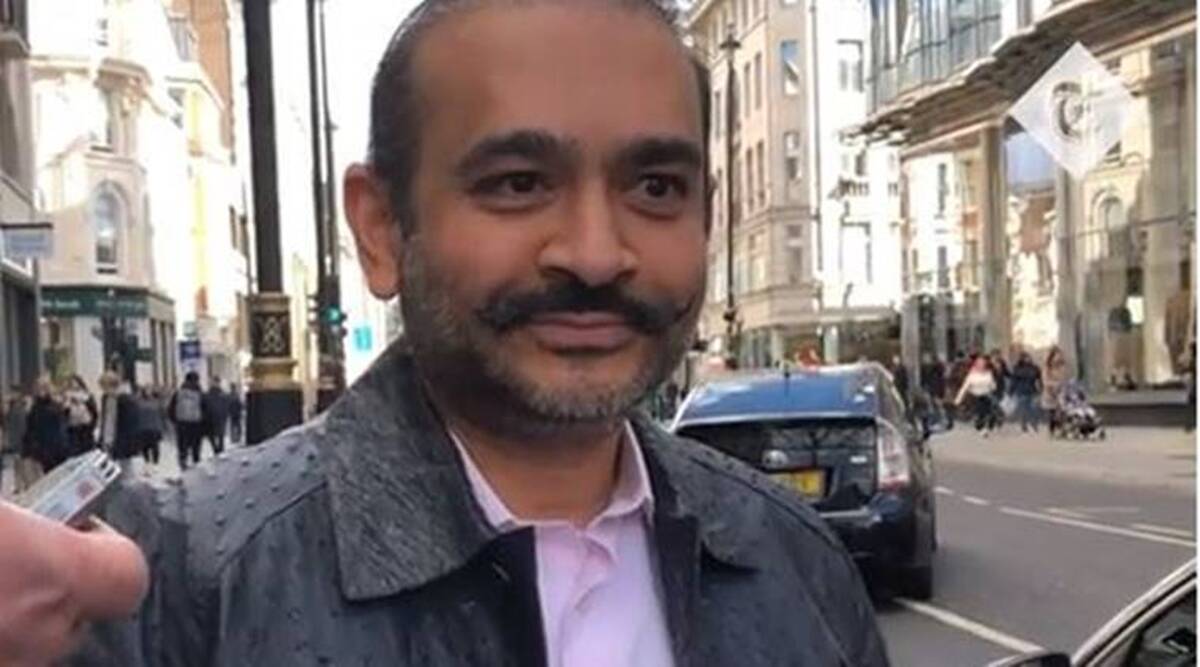
Modi had argued that he was suffering depression and his extradition to India could exacerbate his tendency to commit suicide.
FUGITIVE DIAMOND merchant Nirav Modi – wanted by the Central Bureau of Investigation and the Enforcement Directorate in a Rs 13,500-crore bank loan fraud case – moved a step closer to extradition on Wednesday, after the High Court in London rejected his appeal.
Citing mental health grounds, Modi had appealed against a district court extradition order. He had argued that he was suffering from depression and his extradition to India could exacerbate his tendency to commit suicide.
But the High Court in London ruled that his risk of suicide was not such that it would be either unjust or oppressive to extradite him to face charges of fraud and money laundering. The court, in fact, observed that the arrangements assured by the Indian government in Mumbai’s Arthur Road jail were more comprehensive than the UK prison where he was lodged.
Lord Justice Jeremy Stuart-Smith and Justice Robert Jay, who presided over the appeal hearing at the Royal Courts of Justice earlier this year, said in their verdict that District Judge Sam Goozee’s Westminster Magistrates’ Court order from last year in favour of extradition was “sound”.
The leave to appeal in the High Court had been granted on two grounds related to mental health – under Article 3 of the European Convention of Human Rights (ECHR) and Section 91 of the Extradition Act 2003.
The 51-year-old fugitive diamond merchant has the option of further appeals in the UK and European courts and the process to bring him back to stand trial in India is unlikely to be a speedy one.
Modi, along with Mehul Choksi, is wanted by the CBI and ED for cheating the Punjab National Bank of about Rs 13,500 crore in loans. Choksi is currently in Antigua.
After considering all the evidence and expert opinion on Modi’s medical condition, the judges said, “…we are far from satisfied that Mr Modi’s mental condition and the risk of suicide are such that it would be either unjust or oppressive to extradite him… For these reasons, the appeal is dismissed.” They, however, accepted that the risk of suicide in the event of extradition may be characterised as “high” or “substantial”.
The judges said they were satisfied with the Indian government’s assurances on the arrangements for Modi in Mumbai’s Arthur Road jail and the medical care that would be provided to him.
Modi had submitted that there were no set protocols in Arthur Road jail for mental healthcare and prevention of suicide by inmates. He submitted that his care would largely be entrusted to prison officers rather than specialist mental health nurses.
“In our judgment… the GoI assurances are extensive and… specific to meet the successive levels of concern that have been advanced on Mr Modi’s behalf. The arrangements that we are assured will be put in place are appropriate to Mr Modi’s present and anticipated mental condition,” the judges held.
In fact, they said, the assurances were better than what Modi got while he was lodged at HMP Wandsworth since his arrest in the UK in March 2019. “They are, in a number of respects, more comprehensive than the regime that has been implemented at HMP Wandsworth. Specifically, the arrangements for weekly attendance (and more often if necessary) by the JJ Hospital psychiatrist and the assurance of attendance by a psychologist as and when required, together with the assurance about the availability of relevant and necessary treatment from a private doctor or mental health expert of his choice go significantly further than the regime at HMP Wandsworth,” the order said.
The court rejected a mental health expert’s opinion that Modi would commit suicide, despite any steps taken. “The risk of a person committing suicide increases with the severity of their underlying condition, and Mr Modi neither is, nor is very likely to be, at the most severe end of the scale of depressive illness. Second, he has so far displayed no features of psychotic illness. Third, although he has exhibited persistent suicidal ideation, he has neither attempted suicide or deliberate self-harm nor disclosed plans to do so, except in the most vague and general way,” the order said.
The court also held that Modi is recorded on multiple occasions in the past as having contemplated the idea of suicide at some point in the future. “This does not support the notion that, if he were to attempt suicide, it would be as a result of his having lost the capacity (in the sense that we have discussed) to resist the compulsion/ wish/ desire/ intention; rather, it suggests that his act would be rational and thought-through,” the order said.
It underlined that “there is a public interest in giving effect to treaty obligations and this is an important factor to have in mind.”
The High Court did, however, opine that the District Judge who ordered Modi’s extradition earlier made a decision to proceed to judgment without requiring further assurances from the GoI which was “bold to the point of being unwise”.
“To that extent, we would accept that there were grounds for challenging his reasoning. His conclusion, however, was sound,” the order said.
टिप्पण्या
टिप्पणी पोस्ट करा