
Maha government’s populist measures will harm the economy, say experts
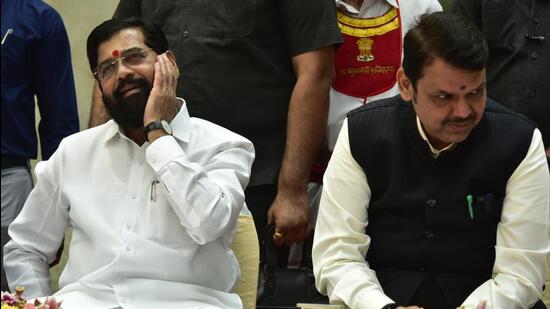
Mumbai: Ever since the Shinde-Fadnavis government took over the reins of Maharashtra, it has announced sops and populist schemes that have cost the state exchequer over ₹12,000 crore
Mumbai: Ever since the Shinde-Fadnavis government took over the reins of Maharashtra, it has announced sops and populist schemes that have cost the state exchequer over ₹12,000 crore. Experts from the field and officials from the state finance department say this is bound to take a toll on the finances of the state, leading to a fiscal deficit or a decline in the spending on development works.
Soon after it came to power in June after a high-voltage political drama, the Shinde-Fadnavis government announced a number of sops for diverse sections of society. Kicking off with a reduction in petrol and diesel prices by ₹5 and ₹3 a litre respectively, it followed this up with an incentive of ₹50,000 to all farmers who had been repaying their loans regularly. The two announcements will result in a burden of ₹3,800 crore and ₹4,700 crore on the exchequer respectively.
The government has also ignored the rules set down by the National Disaster Response Fund (NDRF) with regard to compensation, and given farmers double the amount they were entitled to for crop losses suffered due to unseasonal downpours. The NDRF Rules were further tweaked to accommodate affected farmers who were not in the purview of the rules. This largesse has resulted in the disbursement of ₹4,800 crore from the state kitty, which, if the government had followed NDRF norms, would have been only ₹1,200. Ahead of Diwali, the Shinde-Fadnavis government also announced the distribution of kits of essential items for ₹100 each in ration shops. This subsidy cost the government ₹513 crore.
Apart from the direct financial implications, the government has been taking the responsibility of bank guarantee for various infrastructure projects like the metro and even for cooperative projects under MLAs from the Shinde camp. “Although such decisions do not have an immediate impact on the state’s finances, they are detrimental to its financial health in the long term since the state in many instances ends up repaying the loans for which it stands guarantee,” said an official from the finance department.
When department officials opposed the government’s sops, they were taken to task by their political bosses. “They were instructed to not oppose the government’s decisions and told that the political dispensation would bear the responsibility. This invariably happens during election times regardless of which party is in power, but this government is in a hurry to oblige people for obvious reasons. There are many more such schemes in the offing, which will be announced ahead of the municipal and other local body polls early next year,” the official said.
Officials from the finance department also pointed to the enormous fiscal deficits of the last two financial years due to the Covid-19 pandemic and the consequent need for the government to handle finances with due diligence in the current year. Circa 2021-22 witnessed a fiscal deficit of over ₹36,000 crore, while in 2020-21, it was a whopping ₹78,600 crore. This resulted in a drop in spending on development works, and curbs have been initiated on social schemes and outstanding bills of contractors for construction of roads and buildings.
“We expect to meet the projected revenue receipts of ₹3.08 lakh crore in the current fiscal year as the revenue generation in the first six months has been up to the mark. However, this revenue needs to be utilised judiciously on development works and capital expenditure. If the global recession hits the state economy in the near future, it could lead to a further rise in the fiscal deficit,” another official from the department said.
Economist Neeraj Hatekar is of the view that the government’s attempts to buy support from various sections of society will disturb the fiscal arithmetic and hit the long-term growth of the state. “Instead of going for populist announcements, the government should ensure that a system is put in place which will take care of overall development,” he told HT. “There is no problem in handing out a few sops but one needs to look at the overall social output of these announcements.”
Hatekar added that though Maharashtra does not fare as badly as other states in the recent RBI reports on state finances , it has been reeling under huge debts and fiscal deficits and needs to be careful.

टिप्पण्या
टिप्पणी पोस्ट करा