
India needs to temper its expectations from Rishi Sunak
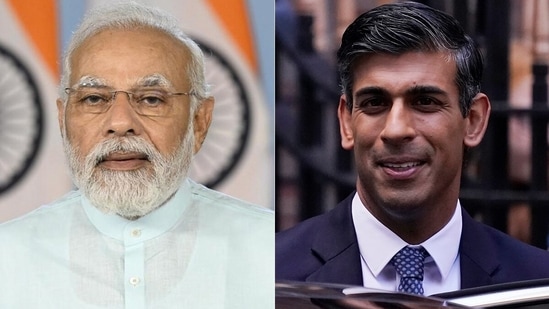
Prime Minister Narendra Modi was one of the first global leaders to congratulate Rishi Sunak on becoming UK PM but the bilateral ties will only improve if structural hurdles of the past are removed.
On Diwali day, Prime Minister Narendra Modi tweeted his congratulatory message to Rishi Sunak for taking over as PM of UK. In his warm message, PM Modi expressed the desire to work closely with Sunak on global issues, and implementing Roadmap 2030. The social media in India was hyperactive on Sunak’s appointment as he happens to be the first non-white and Hindu PM of UK and leader of predominantly white Conservative Party.
While the public mood within Indian diaspora is upbeat over Sunak, there is a strong need to temper expectations from the new UK PM on growth of bilateral relations as there are some structural hurdles that hamper ties between India and UK. The biggest fear and past experiences show that Indian origin leaders in third countries tend to overcompensate their so-called minority handicap and are more loyal than the king when it comes to dealing with country of their origin.
The classic and most recent example is Sunak’s Home Secretary and Indian origin Suella Braverman, who as Home Secretary under Liz Truss brief regime, said the proposed free trade agreement between India and the UK would undermine Brexit objectives and encourage immigration to the UK. She said the majority of immigrants who overstay their visas in the UK were Indians.
However, the India-UK FTA is not the most important thing on PM Sunak’s mind as his priority lies in reviving the British economy and control the rampaging inflation. It is quite evident that merely tinkering with taxes and interest rates will not kick-start the UK economy, which has been hit by Brexit and compounded by global ramifications of Covid global pandemic and the ongoing Ukraine war. UK is still to emerge economically out of Brexit, the Covid pandemic is still around, and the Ukraine war is essentially a fight between the US led NATO vs Russia led by Czar Vladimir Putin. Simply put, it is a long and winding road for PM Sunak.
The Indian diaspora may be legitimately pleased with Sunak’s appointments but whether this will lead to better ties with India is a tough question to answer as it involves national security concerns of the Narendra Modi government. With security being priority one of the Modi government, UK will have to act against radical Khalistani elements who are openly collecting funds in gurudwaras in Britain and radicalizing Sikh youth against India. The issue has been raised at the highest levels with both External Affairs Minister and National Security Advisor raising its forcefully with their British counterparts. The matter has also been raised with British MI-5 by their Indian counterparts with photographic evidence and details through the established intelligence mechanism. The matters have been further complicated by the British government allowing protests (that turned violent) against the Indian embassy over abrogation of Article 370 dealing with status of Jammu and Kashmir and against the CAA legislation. The recent communal conflagration in Leicester has added to Indian concerns.
The second major hurdle in bilateral ties is extradition of Indian economic offenders who are presently seeking shelter in Britain and using the legal system to their advantage. Offenders like Vijay Mallya, Nirav Modi and others have long taken shelter under the British system despite clear cut Indian cases against them which warrants extradition. With the Modi government determined to bring economic offenders to book, this will continue to be a major sore point between the two countries unless UK government takes a proactive stance and extradites the white collar criminals.
The third issue that challenges the improvement of India-UK ties is the umbilical link between the British and Pakistani deep state. This legacy of the long-gone British Raj in the sub-continent allows Britain to box in a higher weight category with the help of Pakistan on imperial follies of Jammu and Kashmir. The presence of large Muslim community from the sub-continent in UK particularly from areas like Mirpur of Pakistan occupied Kashmir add to dissonance apart from the trap of vote bank politics.
The fourth challenge to bilateral ties is UK’s playing behind the scenes with Pakistani deep state in Afghanistan, much to chagrin of India. It was the role played by British Chief of Defence Staff Gen Nick Carter with Pakistan and US before takeover of Kabul by Taliban that has contributed to the humanitarian disaster that Afghanistan is today with women and minorities all thrown under the bus as British still hallucinate on memories of Great Game of 19th century.
The final challenge that Rishi Sunak faces is the unacceptance of white Britain particularly its media of rise of India as a global power. India under Modi has left behind Britain as the fifth largest economy in GDP terms and is on the way up. A modern and confident Indian does not care about his skin colour or the British imperial legacy but is willing to meet on equal terms. The era of Brown Sahibs is over and that is why PM Modi talked about “transforming historic ties with Britain (under Sunak) to modern partnership.” Sunak can change the paradigm.

टिप्पण्या
टिप्पणी पोस्ट करा