
Delhi pollution: Patients with breathing problems queue up at hospitals
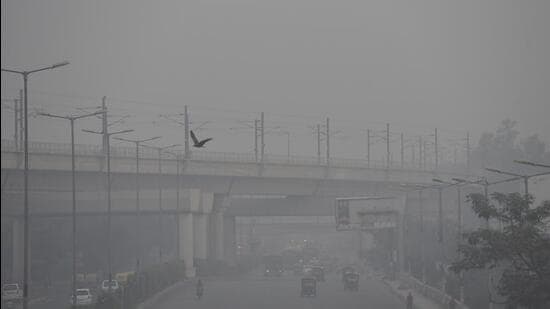
Although air pollution primarily affects the lungs, it can lead to heart attacks and strokes, paralysis and cancer, say doctors.
The impact of deteriorating air quality in the national capital is now visible in the outpatient departments of hospitals in the city. Cases of pollution-related ailments have spiked in the past few weeks, health experts said.
There are a large number of patients returning with intractable cough, shortness of breath and poor energy levels without any fever or other evidence of infection, and their numbers have been mounting, said Dr GC Khilnani, former head of the department of pulmonary medicine at the All India Institute of Medical Sciences, and member of the technical advisory group of global air pollution and health of the World Health Organisation.
“There is another group of patients who previously never had any respiratory ailment but came in with sore throat, running nose, tightness of chest, low energy levels, breathing difficulty and wheezing,” Dr Khilnani said. “These patients do not improve with antibiotics and cough syrups, and often have to be given corticosteroids, inhalers and at times, nebulisation.”
Although air pollution primarily affects the lungs, it can lead to heart attacks and strokes, paralysis and cancer, Dr Khilnani said.
Air quality starts declining in Delhi at the onset of winter with a toxic mix of pollutants from stubble fires in Punjab and Haryana, emissions from Diwali firecrackers and other local pollutants. Cooling temperatures and calm winds in the coming weeks are also expected to worsen the ambient pollution.
The season becomes a busy time in hospitals with the condition of patients, especially vulnerable sections like children, senior citizens and those with a history of prior lung-related ailments, getting worse, health experts said.
This year, there has been a rise in the number of new patients with acute asthma, bronchitis, rhinitis (nasal allergy) and similar illnesses, said Dr Akshay Budhraja, consultant pulmonologist at Aakash Healthcare. The number of young patients coming with flare-ups, flu and lung infections is also alarmingly high, he added.
“There is a significant increase in the number of patients coming with acute attacks of asthma and COPD (chronic obstructive pulmonary disease),” Dr Budhraja said. “Most of them have a history of similar complaints every year around Diwali. Also, cases of stroke and cardiac ailment have gone up in the past week.”
The rush of patients is only expected to increase, warned Dr Vikas Maurya, director and head of the department of pulmonology at Fortis Hospital, Shalimar Bagh.
“From the last couple of weeks, there has been an increase in patients in OPD and those requiring admissions with pneumonia, bronchitis, viral infections, asthma and COPD exacerbations,” Dr Maurya said. “It remains to be seen how much the effect of pollution will be there this season on respiratory illnesses in the next few days or weeks.”
“Currently, the days are still warm and sunny, so the impact of pollution is not as much,” he said. “As winter intensifies, we will see more such patients.”

टिप्पण्या
टिप्पणी पोस्ट करा