
BMC twiddles its thumbs as lethal construction waste piles up in Mumbai
STRAP: Proposed waste recycling centre hasn’t taken off even after five years Mumbai: Ever since the Covid 19-induced lockdown was relaxed last year, construction activities in Mumbai have resumed in full swing, with builders frenetically trying to make up for lost time
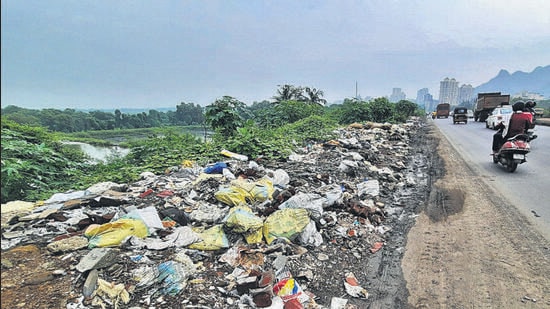
Mumbai: Ever since the Covid 19-induced lockdown was relaxed last year, construction activities in Mumbai have resumed in full swing, with builders frenetically trying to make up for lost time. The downside of this: mounds of construction debris in places ranging from city streets to pavements to mangroves.
Hindustan Times, on September 24, had reported that a Mumbai Port Authority contractor had dumped construction debris into the sea instead of transporting it for safe disposal as per the Centre’s Construction & Demolition Waste Management Rules (2016). More than a month later, the debris continues to lie there with no solution in place.
In another appalling example, this one at a private trust land in Marol’s Krishna Lal Marwah Marg, a giant mound of construction debris around two storeys high, on the banks of the Mithi River, has begun calving off into the water body and footpath. The dump has been around for so long that a thick sheet of vegetation has grown on top of it.
Across the city, citizens’ bodies are attempting to deal with the menace to little effect. Chirag Dedhia, member of the Mumbai North Central District Forum, has complained multiple times about private contractors dumping debris at night. “The BMC picks it up but the dumping happens again,” he said. “Recently, I complained about debris that had been lying on D S Baretto Road for a month. After several follow-ups, the BMC F North ward responded on Twitter, saying the material would be picked up only after payment by the violator who left it there.” While the BMC awaits payment, the waste remains, posing a hazard to the environment and people.
Construction debris contains fine particles of silica which can enter one’s lungs and bloodstream and trigger a range of ailments. While respiratory distress is common, conditions like polycystic ovarian disorder, diabetes, brain fevers and impaired cognitive function in children have also been linked to ingredients such as lead, asbestos and plaster which are staple components of construction debris. When debris is dumped out in the open, it also becomes a major source of PM2.5 and PM10, contributing to air pollution.
According to the 2021-22 annual report by the Maharashtra Pollution Control Board, the C&D waste generated that year in the BMC was 2101263 Mega Tonnes (MT). However, activists claimed this figure was much higher. The report also said that 100 percent of the waste had been dumped and none recycled.
Environmentalists pointed out that debris was also a growing threat to the city’s riverine and mangrove ecologies. “River banks, mangrove swamps and nullahs, which are hidden away from plain sight, are where this material lands up, not only choking waterways but also leaching pollutants into the water,” said Stalin D, a city-based environmentalist and member of the high court-appointed Mangrove Protection and Conservation Committee.
Since its instatement in 2018, the committee has received 165 complaints, most of them relating to sometimes massive dumping in mangrove areas. About half the complaints have been ‘resolved’, so far, while the rest are pending investigation or have been transferred to the Maharashtra Coastal Zone Management Authority. Notably, however, not a single complaint has led to the restoration of damaged mangroves, which is part of the mandate given to the committee by the HC in its final judgement of September 2018.
An official with the state forest department, tasked with the protection of mangroves maintained that respective urban local bodies (ULB) needed to clean up debris. “We are working out a plan for removal of C&D waste in mangrove patches, but there are funding and manpower issues. ULBs have more resources at their disposal,” he said.
Sumaira Abdulali, convenor of environmental NGO Awaaz Foundation, pointed out that despite the tremendous scale of construction work, Mumbai did not have a dedicated C&D waste management plant, which resulted in random dumping of debris. “The first ever waste debris management plan was implemented in 1999 in Navi Mumbai,” she said. “It’s ironical that after 23 years, Mumbai still does not have even one recycling plant.”
Abdulali also pointed out an important fact: that the majority of construction waste, unlike municipal or industrial waste, is in fact completely recyclable. “On the one hand, we are illegally mining an invaluable resource like sand for construction and on the other, we are dumping the debris. Imagine the resources one could save by segregating this waste properly,” said Abdulali, adding that it was imperative for the government to set an example for the private sector. “The government is the largest builder after all. So the change has to come at a policy level.”
Keval Valambhia, COO of CREDAI-MCHI, an apex body for real estate industry members in MMR, said that developers who were recycling waste as per the norms needed to be identified and rewarded by ULBs with incentives such as a waiver in property taxes. “We have been eager to work with the BMC on a plan for such result-based incentives,” he said.
In 2017, the BMC had proposed to recycle 95 percent of the city’s construction waste and proposed a 2.7-hectare recycling centre in Mulund to handle 1,140 tonnes of construction waste per day. Five years later, the project is yet to be implemented and currently awaiting the BMC commissioner’s approval.
When contacted for a comment, an official with the BMC’s solid waste management department said that the tenders had been opened and a contractor shortlisted. “But according to the new tender, contractor will decide on the site of the recycling centre,” he said. “It will not be Mulund anymore. The tender is awaiting an approval from the commissioner. It will take around one year for the recycling plants to be functional after the work order is issued.”

टिप्पण्या
टिप्पणी पोस्ट करा